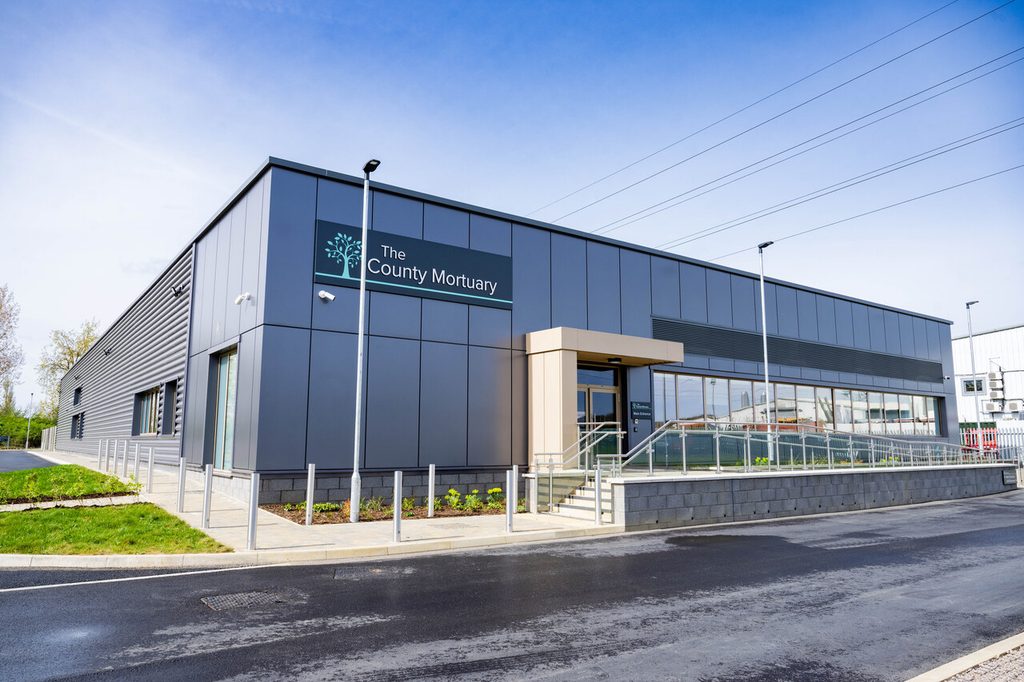
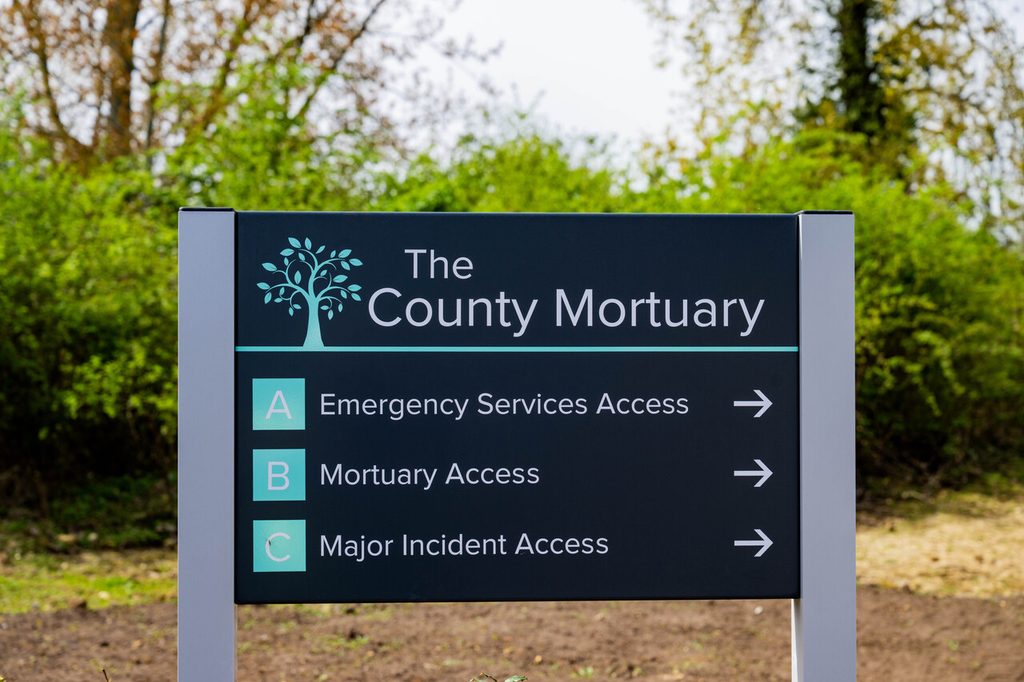
Delivering a unified state-of-the-art regional mortuary hub and disaster center while navigating complex site, environmental, and overhead safety constraints.
CLIENT: West Northamptonshire Council (in partnership with University Hospitals of Northamptonshire NHS Group, Northamptonshire Coroner’s Service, Police & Funeral Directors)
SECTOR: Healthcare / Civic & Public Sector
CONTRACT TYPE: JCT Design & Build
Project Overview
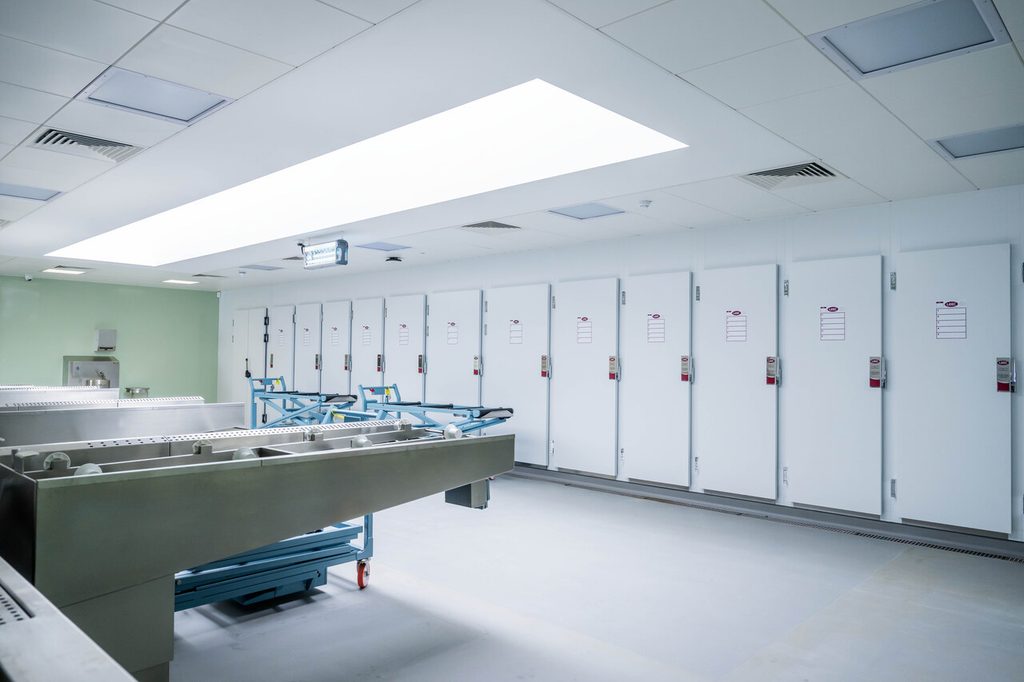
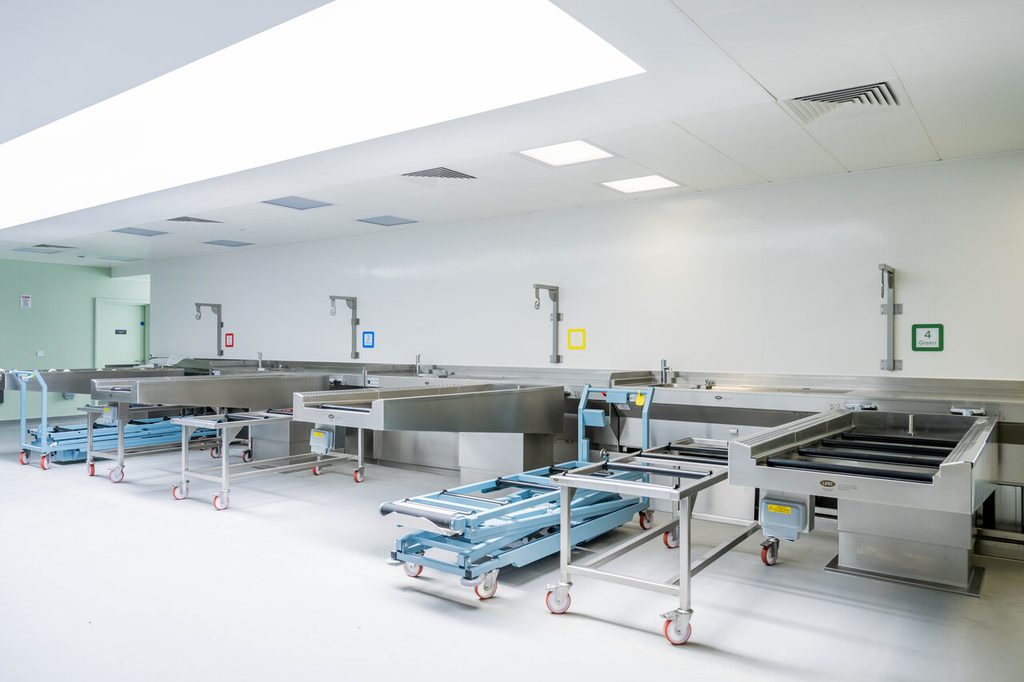
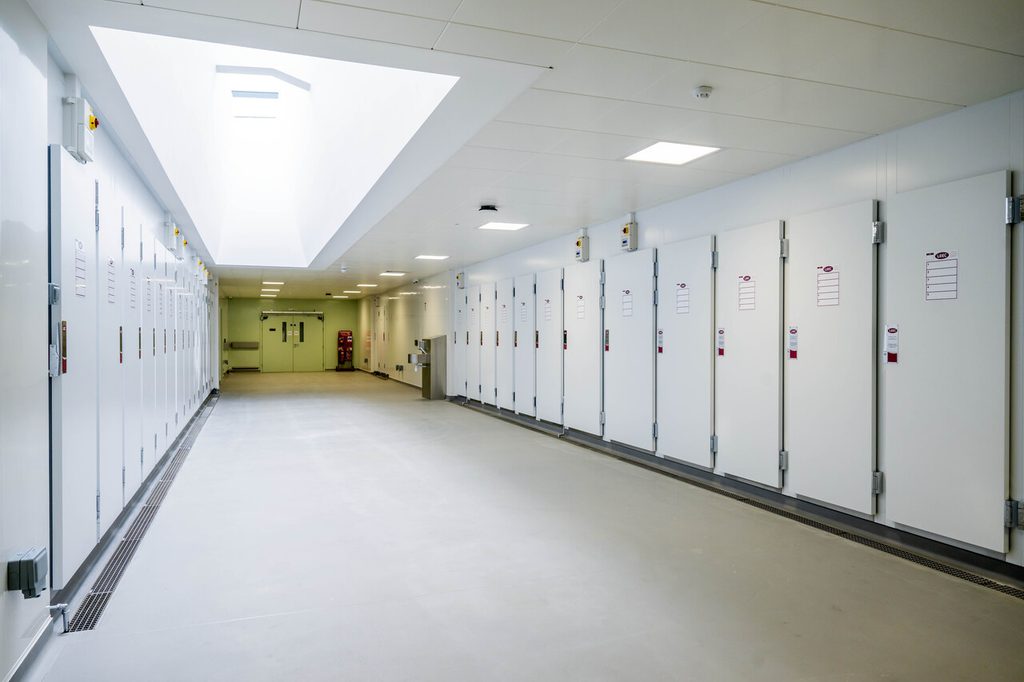
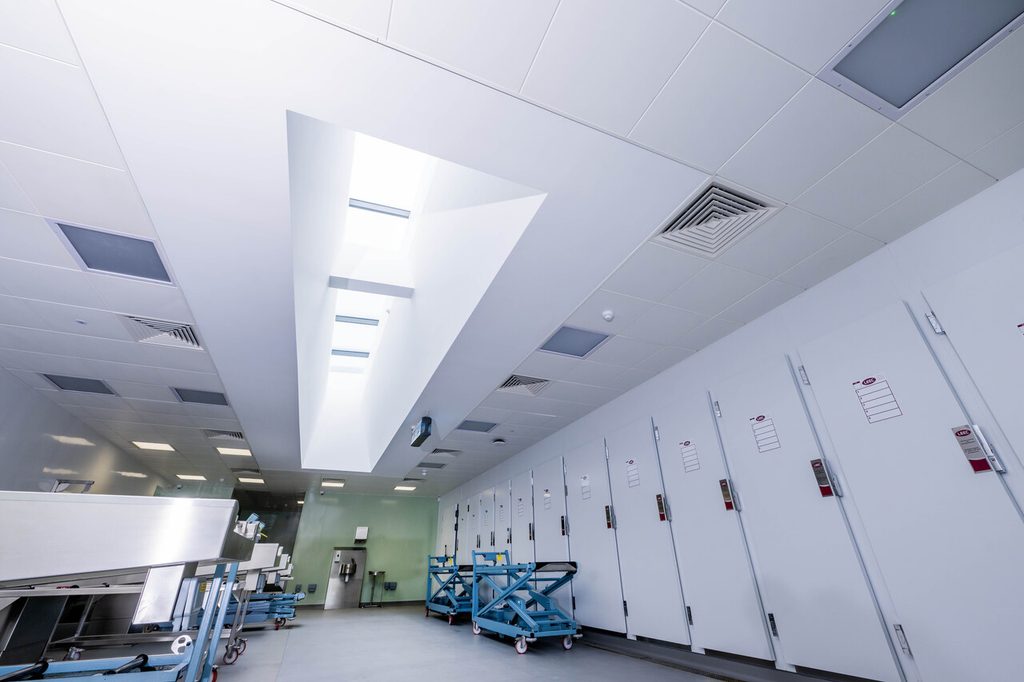
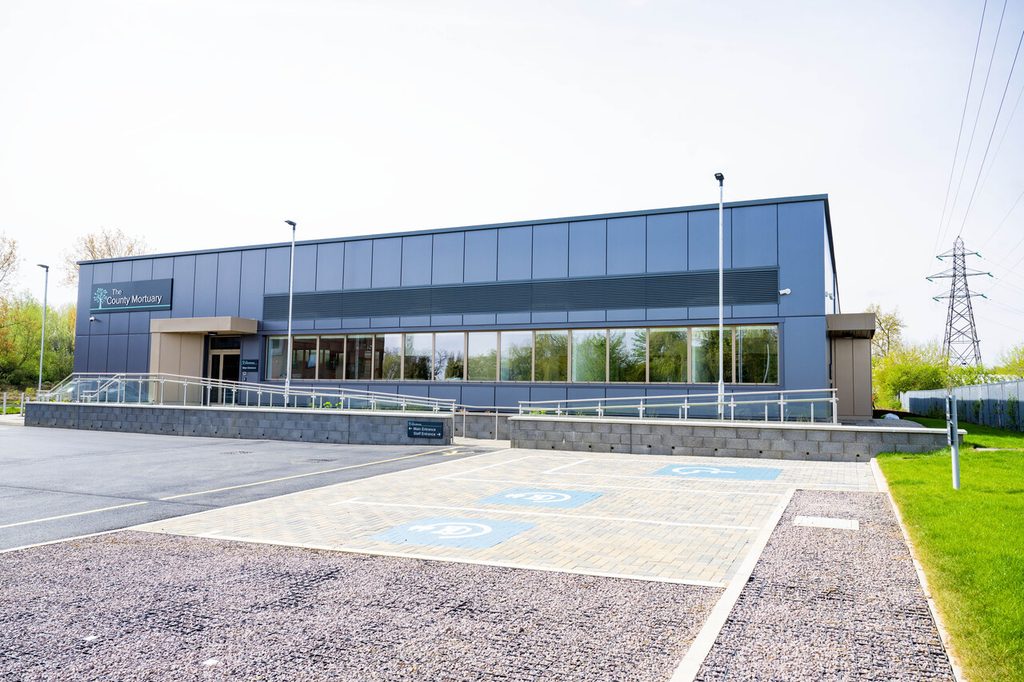
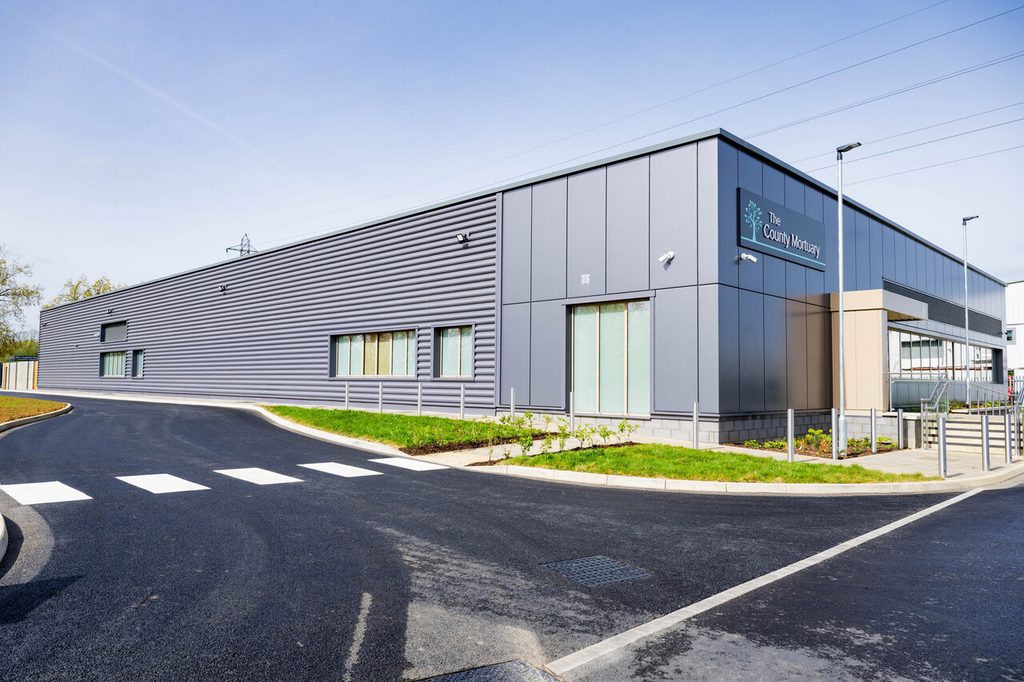
As a bespoke £9.40 million project delivered for West Northamptonshire Council, it stands as the first facility of its kind in England. The project successfully replaced a fragmented, hospital-based post-mortem system with a single, state-of-the-art regional facility engineered to rigorous Human Tissue Authority (HTA) standards. To resolve significant site challenges, the project footprint was relocated from a high-risk Flood Zone and wetland to a former coach park, requiring a complete redesign of the ground and drainage schemes. Execution near live overhead high-voltage power lines was managed through an industry-leading partnership with National Grid, pioneering “virtual ceiling and wall” crane barrier software to guarantee safety. Beyond technical delivery, the scheme achieved an EPC A rating through roof-mounted solar PV, Air Source Heat Pumps and high-efficiency Air Handling Units, while driving £4.6M in Social Value (a 49% SVROI) and retaining 68% of total spend within Northamptonshire SMEs.
The Challenge
Northamptonshire’s post-mortem services were previously split across multiple aging hospital sites. West Northamptonshire Council required a purpose-built regional hub that could double as a regional disaster centre supporting the local authority resilience forum.
The project faced site and logistical constraints:
- Planning & Environmental Hurdles: The original site was rejected due to Flood Zone classification, requiring a fast-track site move to a former coach park with high groundwater levels.
- Infrastructure Hazards: The active site sat adjacent to live National Grid overhead electricity pylons.
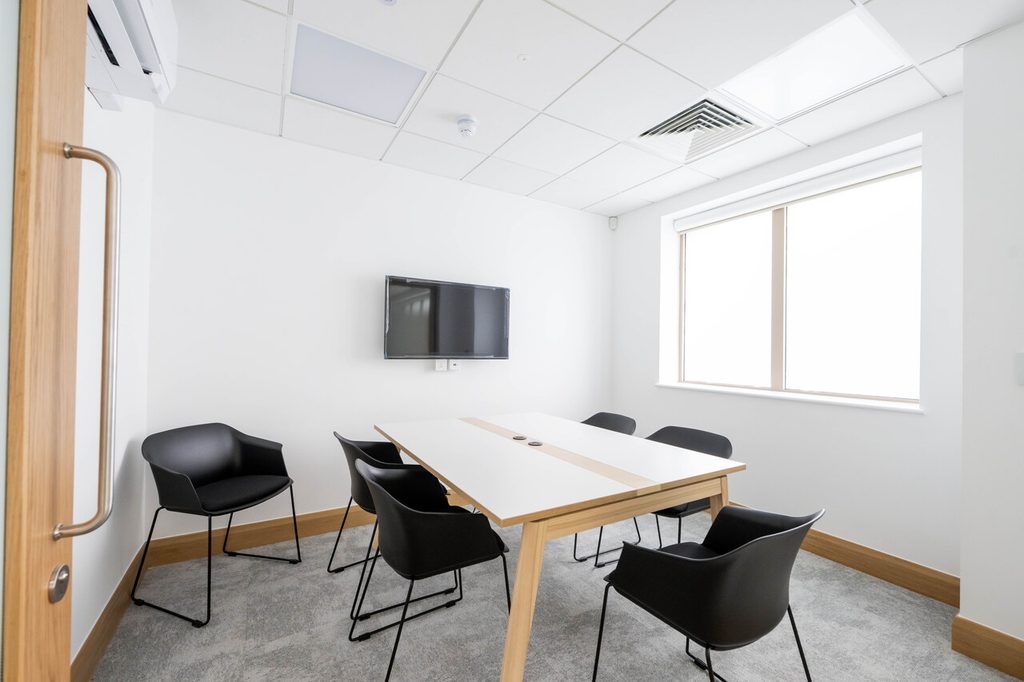
- Sensitive Multi-Stakeholder Requirements: Design solutions had to balance HTA licensing, police evidence integrity, bereavement dignity, and cultural sensitivities across two separate NHS Trusts, Coroner services, and local police forces.
Our Approach & Innovation
1. Pre-Construction Site Adaptation & Civil Engineering
Following the site relocation, Stepnell re-engineered the drainage and ground improvement strategies to prevent programme disruption. Instead of deep, high-risk excavations in groundwater, Stepnell installed a shallower, wider underground attenuation tank alongside a 412-stone-column vibro-ground improvement scheme.
2. Virtual Safety Barriers & Precision Cranage
Constructing parallel to live National Grid overhead electricity pylons introduced major logistical safety risks. Standard safety protocols typically only covered driving beneath power lines, rather than operating heavy lifting equipment alongside them.
Stepnell collaborated closely with the National Grid to pioneer a specialised lifting methodology. The site cranes were programmed with virtual ceiling and virtual wall software, which automatically restricted the movement of the crane jib, physically preventing it from encroaching on the pylons’ exclusion zones.
3. Offsite Fabrication & Supply Chain Acceleration
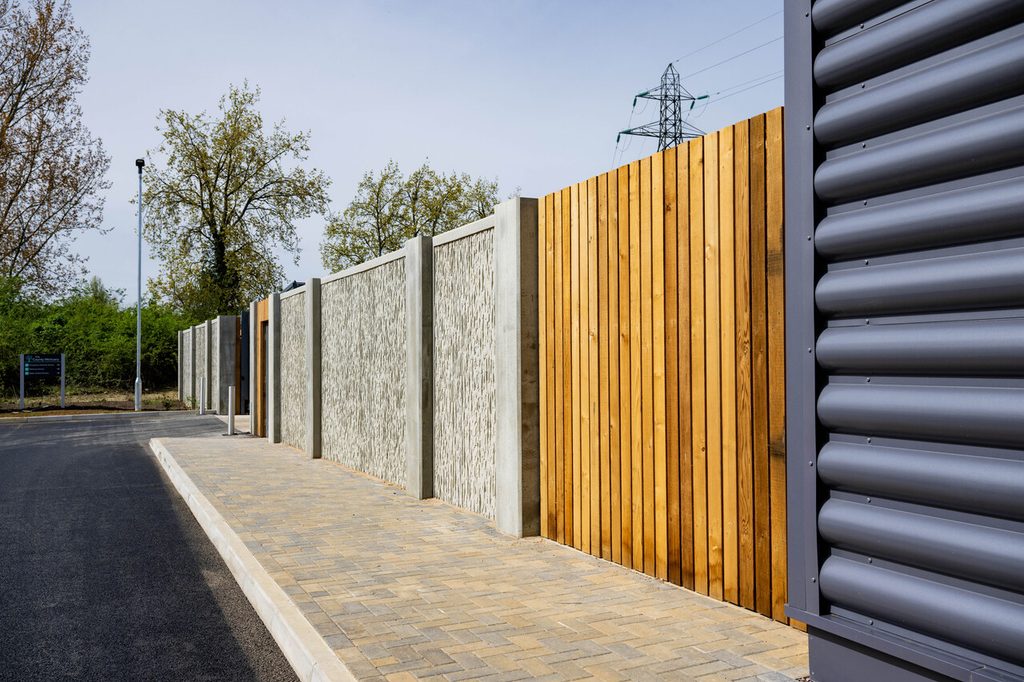
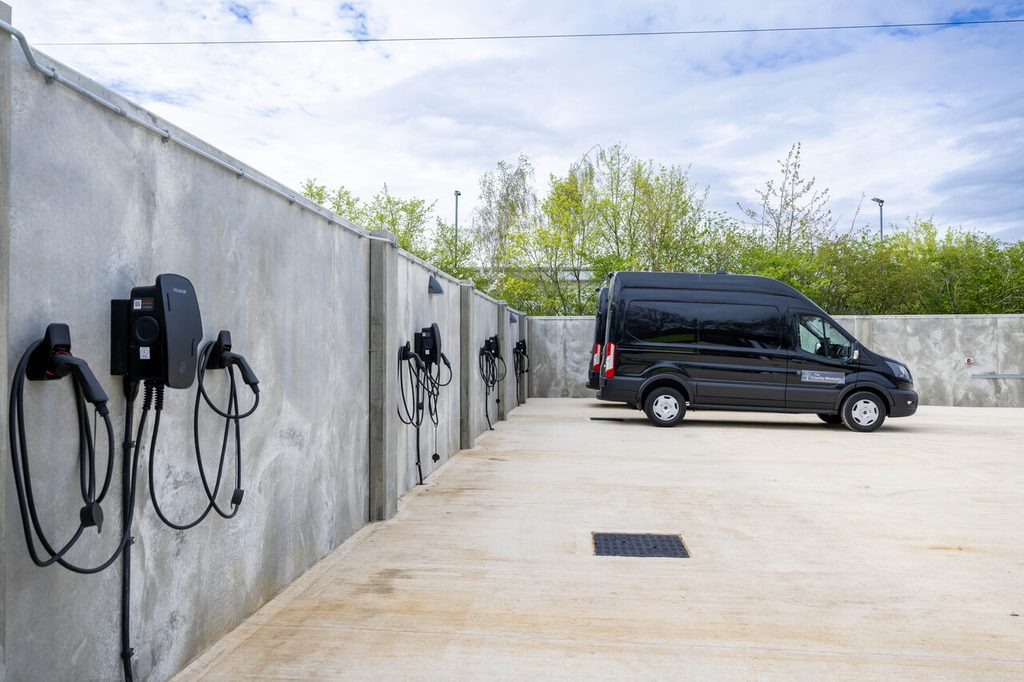
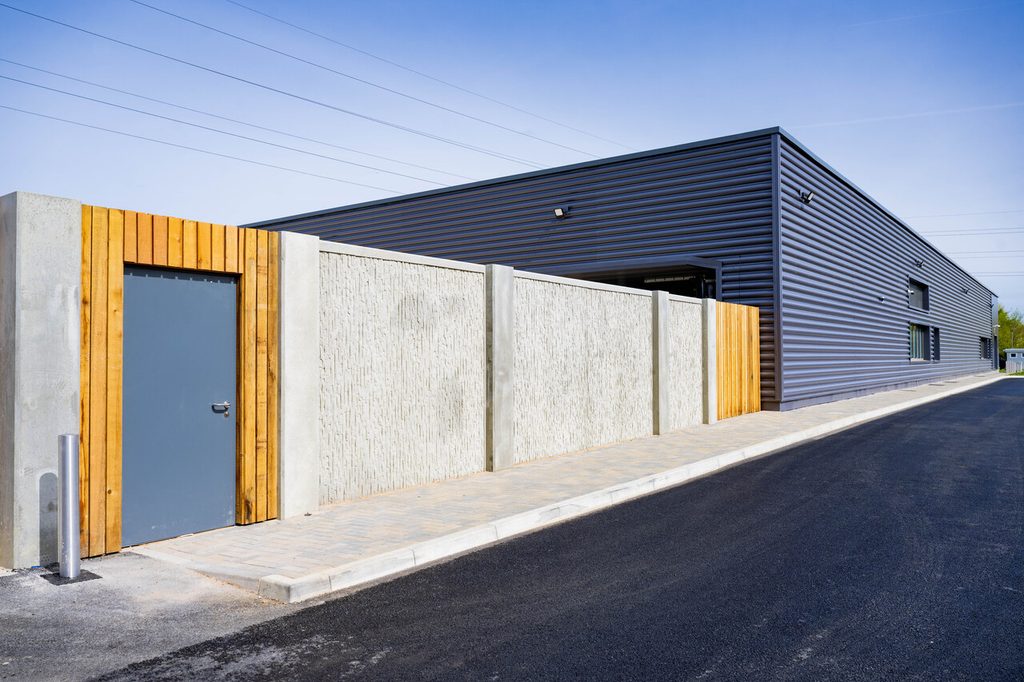
- Pre-Cast Concrete Yard Panels: Stepnell replaced traditional brick and render walls around the external service yard with decorative pre-cast concrete panels, reducing installation time from weeks to three days while providing immediate visual privacy.
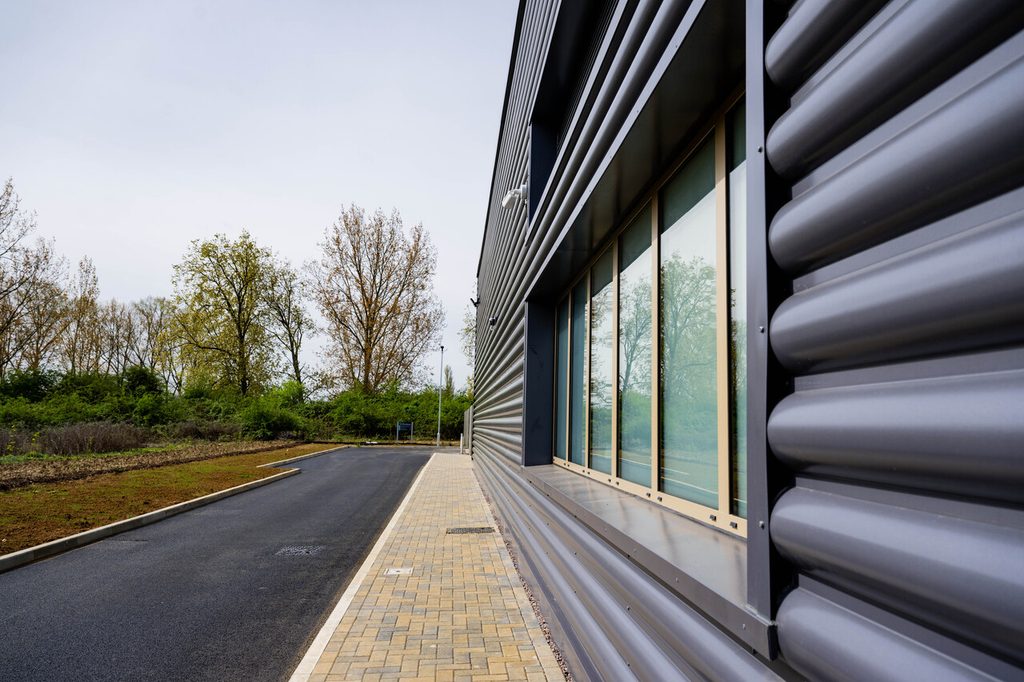
- Early Enclosure Procurement: Early engagement with European cladding suppliers for Euro Cladding and Trimo facade systems protected the critical path from overseas supply chain delays.
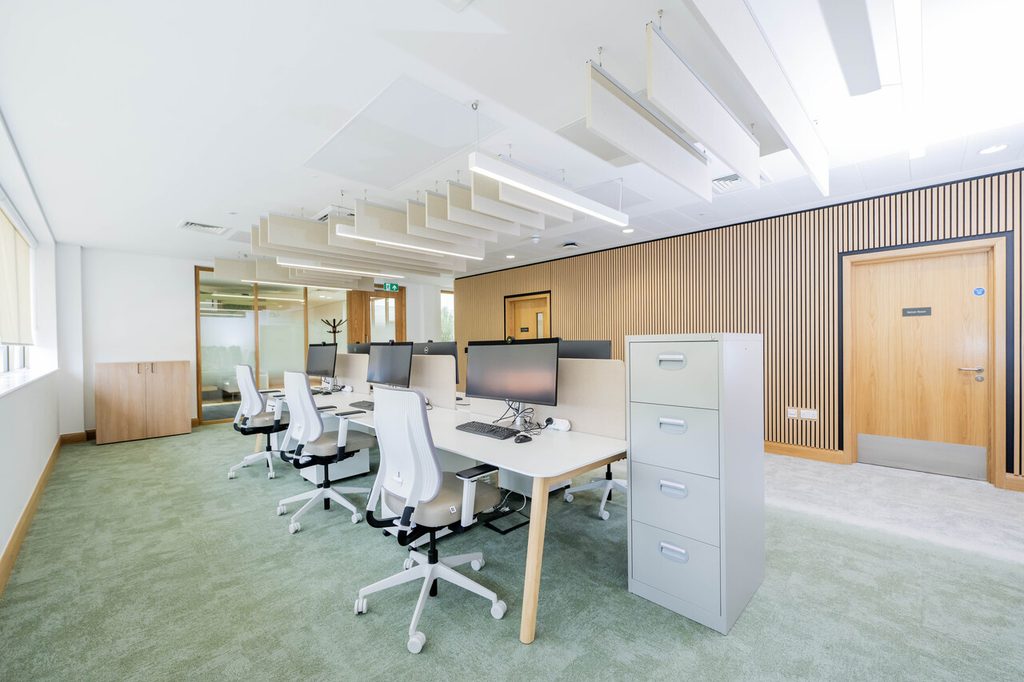
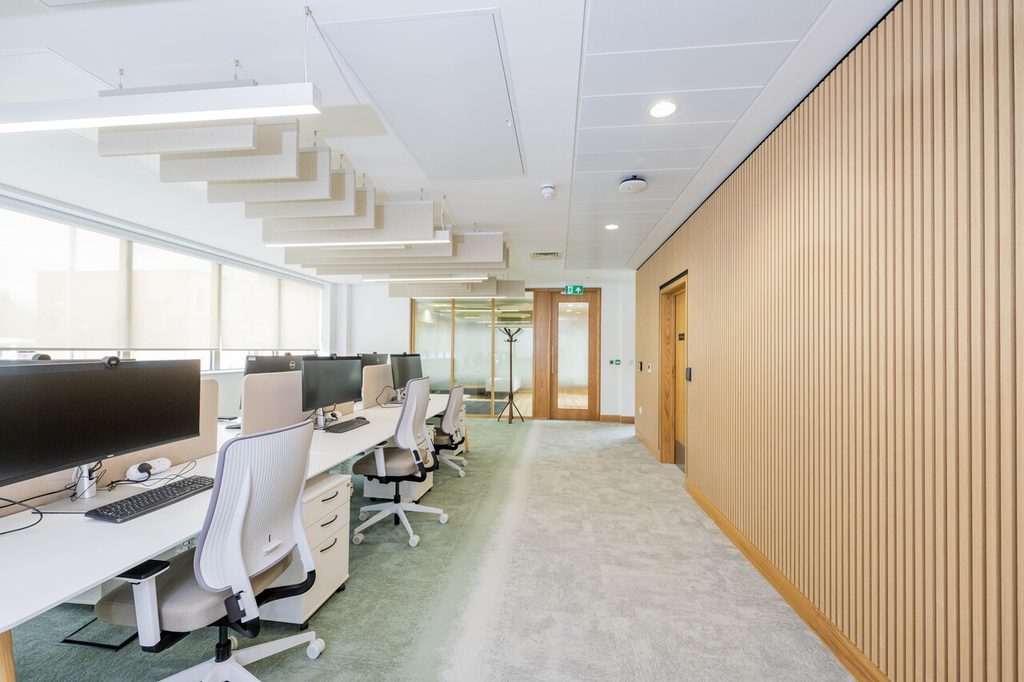
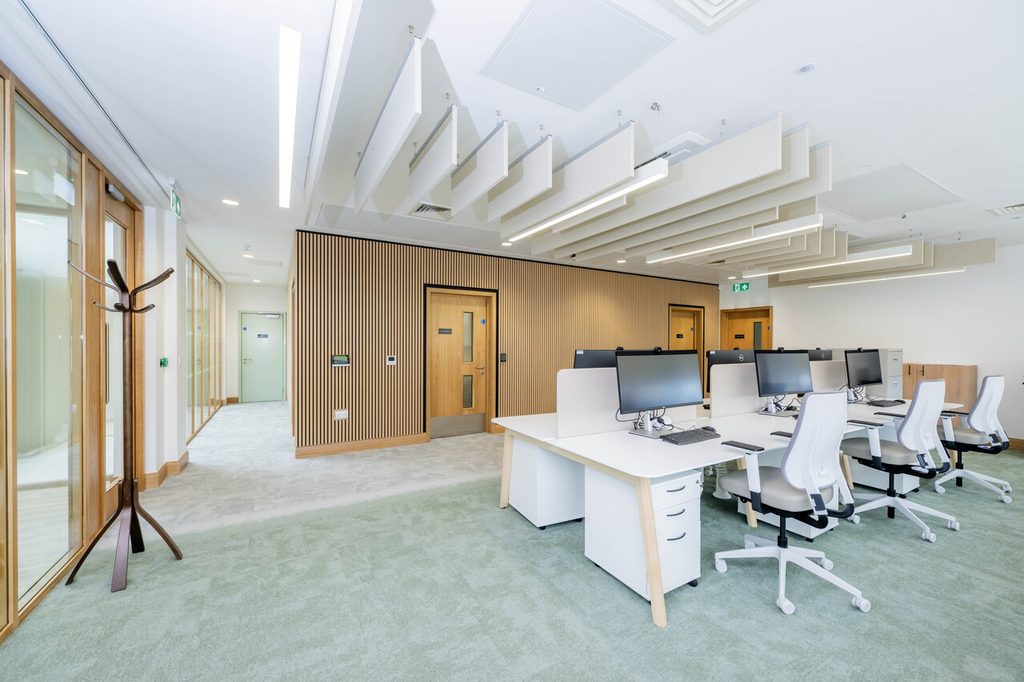
4. Bereavement Care & Cultural Integration
Stepnell integrated specific features to support grieving families and operational protocols:
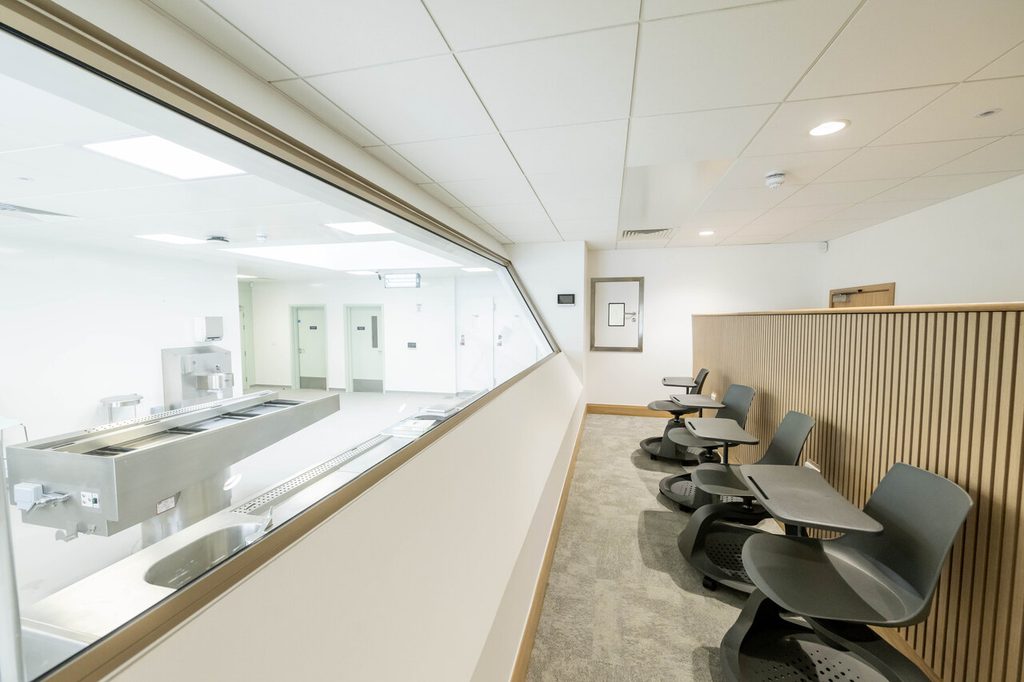
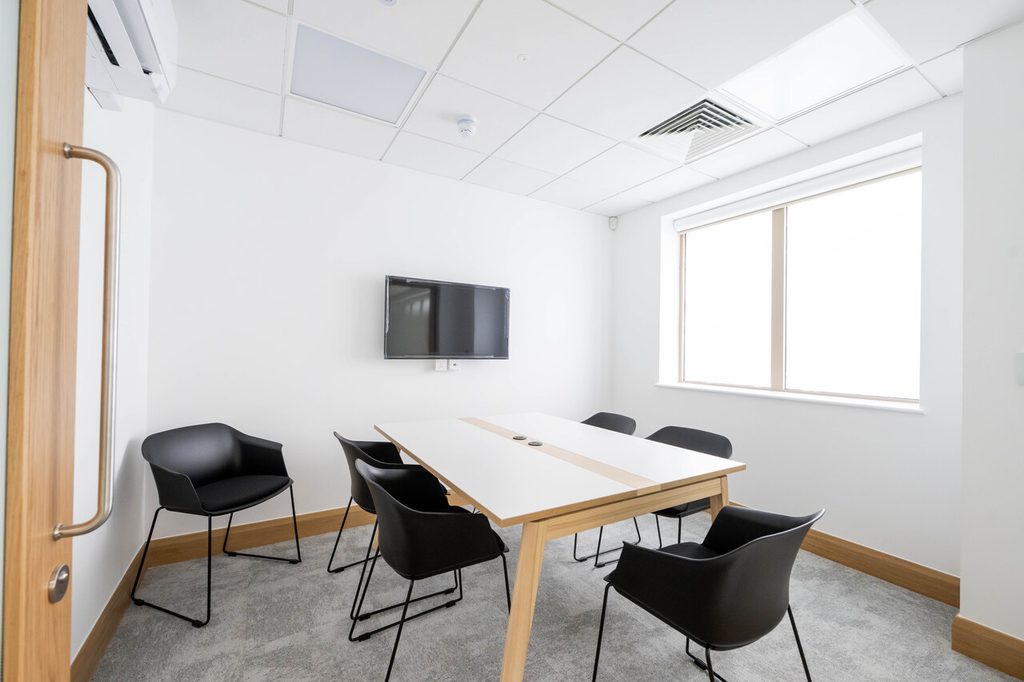
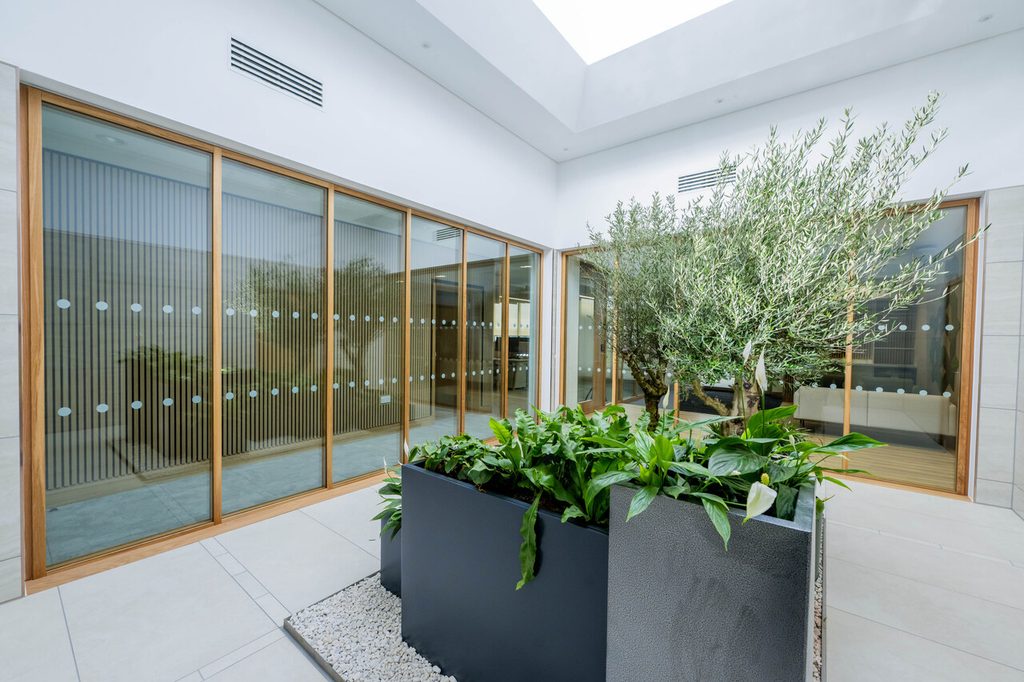
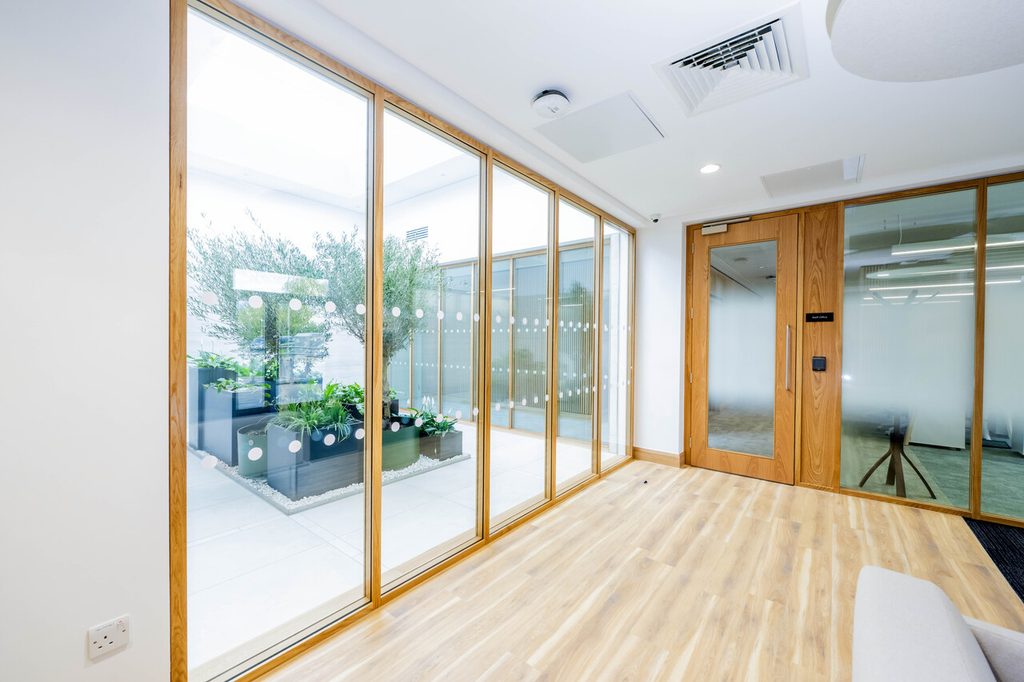
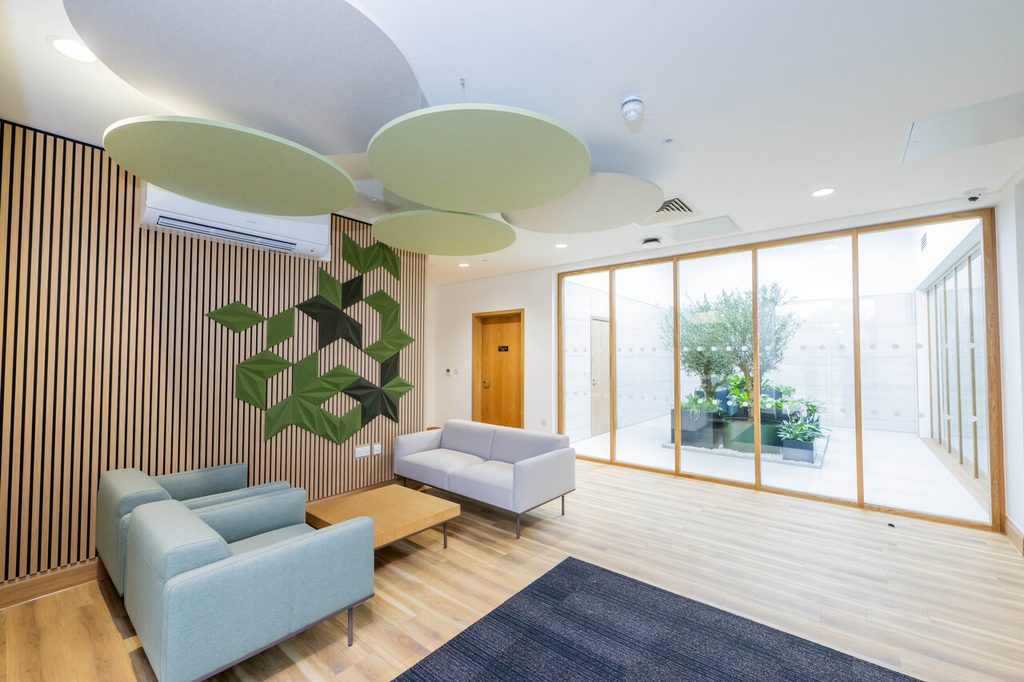
- Dedicated viewing galleries and an internal winter garden reflection area.
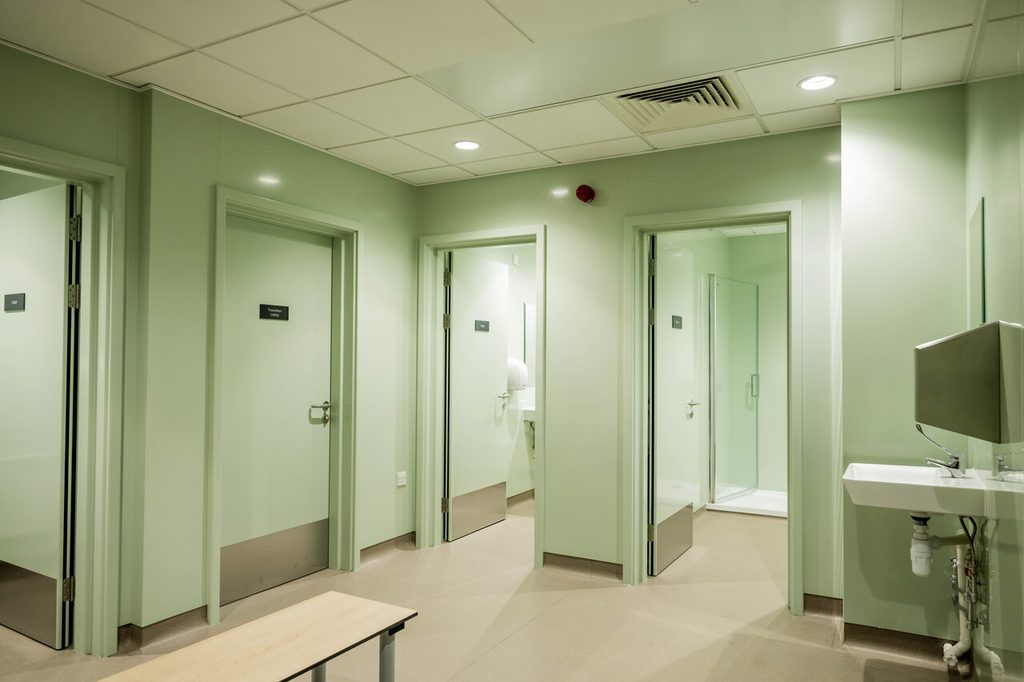
- Cultural washing facilities and discrete window manifestations to maintain privacy.
- Dedicated access control and an isolated, secure Wi-Fi network specifically for police major incident teams.
5. Sustainable Energy Strategy
- Step Energy: Installed roof-mounted solar PV arrays to power site operations.
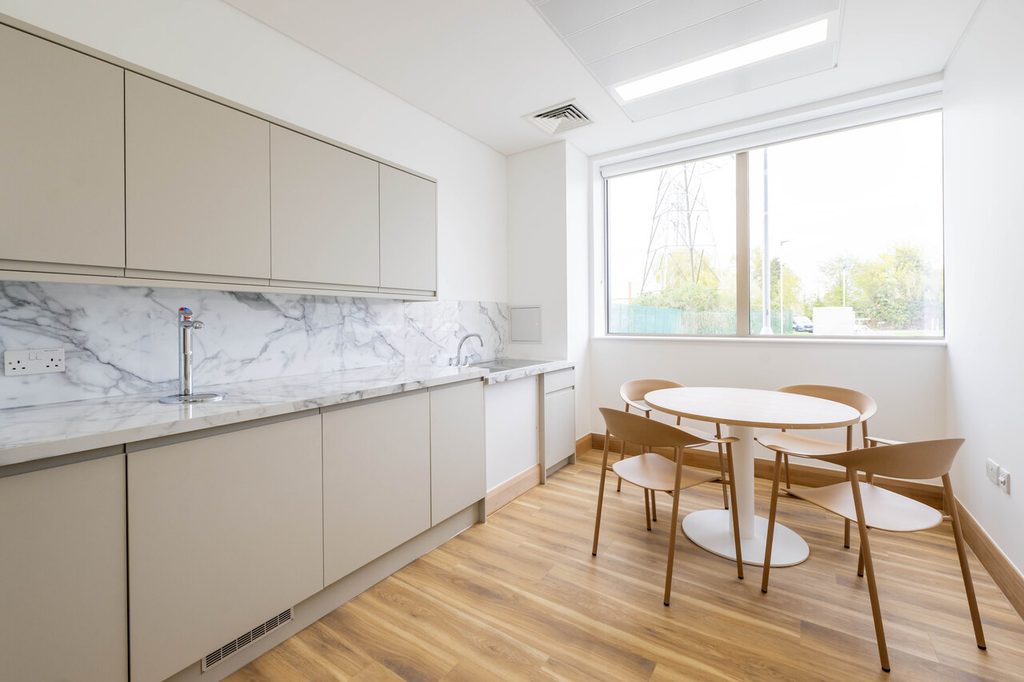
- Lawford Bespoke Joinery: Manufactured interior oak handrails, window boards, and bespoke leaning frames.
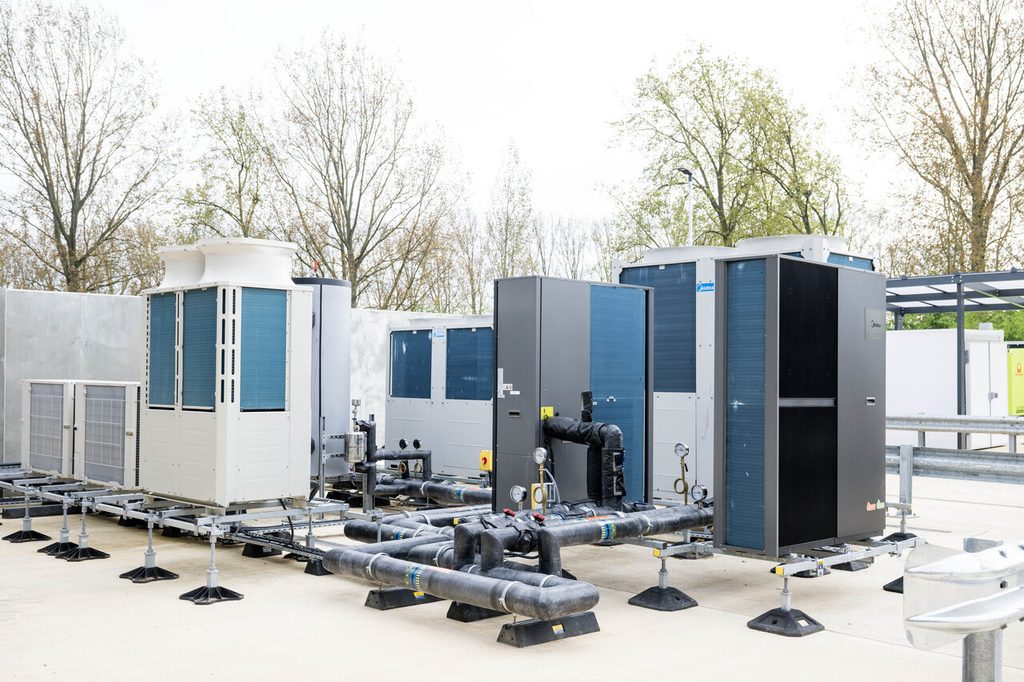
- Zero Carbon Focus: Integrated 4 Air Source Heat Pumps (ASHPs) and custom Air Handling Units (AHUs) to secure an EPC A energy rating.
Social Value & Community Legacy
The true success of the Northampton Mortuary lies in how the team respected the building’s eventual purpose while deeply embedding themselves in the local community. Even though the project operated under a framework with a naturally limited scope for contractual social value KPIs, the team chose to look for ways to be better, ultimately generating £4.6 Million 49% SVROI in social value.
- Local Supply Chain: 68% of procurement spent with local sub-contractors and suppliers.
- Skills & Apprenticeships: Delivered 40 apprentice weeks on-site and partnered with the AKG Restart Scheme for career taster days and mock interviews.
- Educational Engagement: Conducted 10 hours of school visits, hosted a time capsule event with East Field Academy, and ran CV workshops for 60 students at Moulton College.
- Community Support: Repaired planters and fencing at a local SEND school and donated on-site harvested vegetables to a local food bank.
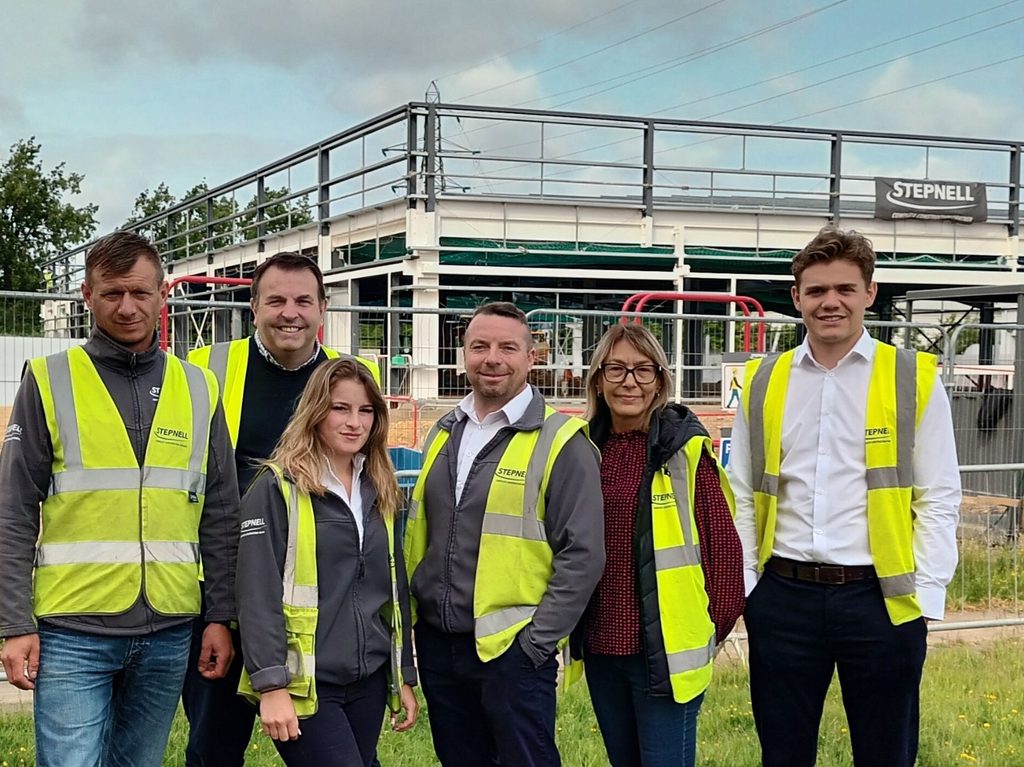
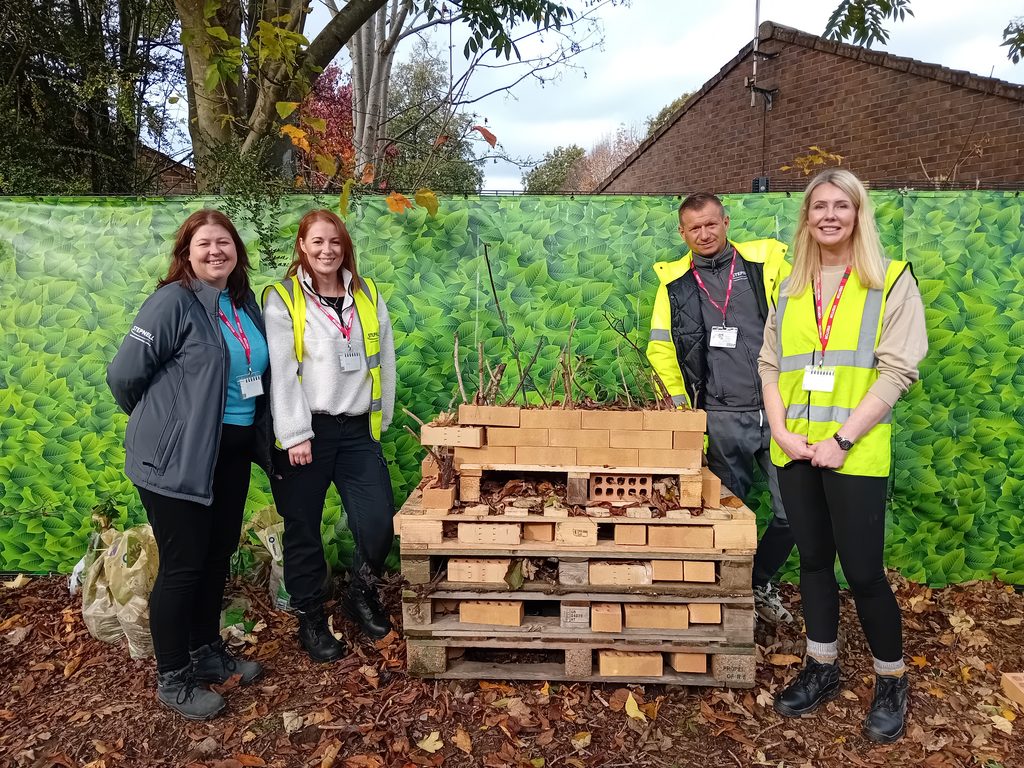
We looked after our own team with the same care we showed the community. We delivered 10 hours of mental health and EDI (Equality, Diversity, and Inclusion) training, which included a dedicated mental health workshop attended by 18 people, including both Stepnell employees and subcontractors. We also hosted a site visit for industry professionals to share knowledge on the complex build.
Even our staff wellbeing initiatives had a wider purpose: during the build, the site team maintained on-site planters filled with fresh herbs and vegetables, which have now been donated to a local food bank.